Wednesday, May 31, 2023

Restorative Practice PLD with Marg Thorsborne

Restorative Practice is a waka we're currently boarding at Te Māhuri Mānuka. As with any school, some staff are already seated and ready to go, others are tentatively finding their spot, and some are possibly hanging at the back of the line deciding if this is a journey they want to embark on.

Two day PLD sessions can be long and tiresome, often only made bearable with a good lunchtime spread and strong coffee. While the coffee on offer was devastatingly instant, the knowledge, skills, and absolute conviction with which this content was offered was the best I've seen in a long time. 

Marg Thorsborne is the Restorative Practice guru, and an incredibly powerful facilitator. If ever you are offered the opportunity to listen to this wahine toa, take it.  I was absolutely hooked from the moment Marg stood and acknowledged mana whenua, throughout all the quirky anecdotes from the coal face of her experiences, to the final moments when she sent us away to go forth and restore the ruptures. 


Ideas taken from the day

                        CONNECT BEFORE CONTENT!

  • Kids need to recognise their own feelings too.
  • Interoception - sensing internal signals from your body. Helps you understand what's going on inside you.
  • We need to move away from behaviourism - that behaviours are acquired through conditioning.
  • Zero tolerance is nonsense. 
  • There is no 'one size fits all' model
  • Stand downs allow breathing time and a break/reset (I don't see a problem with this if all other avenues have been exhausted).
  • PB4L - contingent on 'good behaviour.' It's reward for compliance. Extrinsically motivated. Think Skinner (human behaviour conditioning) and Pavolv (animals for goodness sake!)
  • If we're going to use PB4L, let's call it PC4L - Positive Culture or Climate for Learning.
  • We are trying to create good habits in our young people. Neuroscience - practise literally changes your brain. "Perfect practice makes perfect!"
  • It can take 28 focused repetitions to unconsciously competent at something. Nathan Wallace says 90!
  •  We want to bridge the gap between home and school. Expectations can narrow the gap. Kids learn 'code switching' - learn the rules and play by the rules.
  • For teachers - Be authentic, be genuine. Allow vulnerability. 
  • Unattended ruptures cause the erosion of trust.
  • Teach what shame and pride are in class!
  • When the brain is in cognitive shock the rational brain shuts down, leaving the limbic (emotional brain) to say 'piss off' and the reptilian brain (stem) to go into fight/flight/freeze mode. 
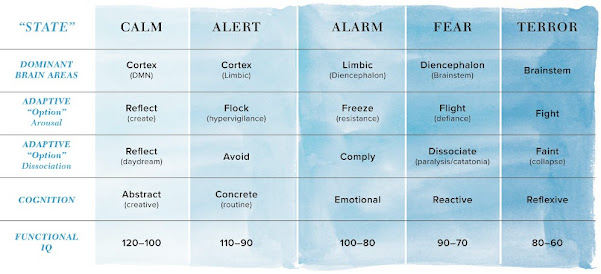


Very interesting to note when I think of some of our cherubs.  
Bruce Perry
  • Shame is feeling bad about yourself as a person.
  • An acronym for easy relationship building 
    T - Touch (a pat on the back, for example)
    U - Use the child's name
    M - Make eye contact
    S - Smile!
  • Use a check in system when kids arrive at school. Zones of Regulation is too broad! 
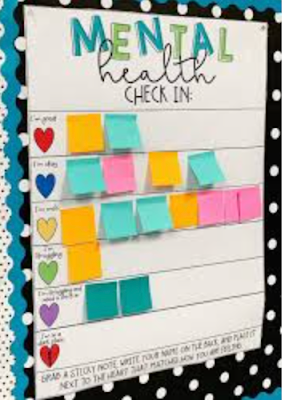
Key - 1. Great, 2. Okay, 3. Meh, 4. Struggling, 5. I'm having a tough time (need a check-in), 6. Not doing good.


Fabulous Quotes
  • "Kids with trauma history don't need more punishment. And quite frankly, they don't need more stickers." - Dr Ross Greene    
  • Perfect practice makes perfect.
  • Be curious, not furious!


Great names & reads I need to check out

  • Bruce Perry - "States of Cognition" 
  • Lawrence Steinberg - neuro-science specialist
  • Ross Greene - laggin skills - (already on that waka!)
  • Marconi Union - "Weightless" Calming waiata - proven to decrease anxiety.
  • "The boy who was raised as a dog." Brain function and trauma
  • Brenē Brown - Ideas on shame.
  • St Luke's Innovative resources
  • Bruce Perry short clips from the handouts.


Restorative Practice - What does it look like?

The purpose of Restorative Practice is to
restore the ruptured relationship

Basic Sequence 

  1. Telling the story of what happened (explanation).
  2. Hearing about the harm (and reaching a shared understanding).
  3. Acknowledgement of the harm.
  4. Making a plan to make things right (including follow-up).

Use the scripts - don't be afraid to have them with you if you are facilitating. You can say, "there are a lot of important questions I need to ask so we can make sure we have all the information needed to restore this relationship. I don't want to miss anything out..."

Pre-conference Interview 
Show people involved a map of the seating plan.
Check the facts - chat 1:1 with people involved.
Hand out briefing sheet Student guide & parent guide. Use one from Marg with our school stamp on it.  


Introduction -
Thank people for coming.
"We're here to talk about ... which happened yesterday, when ... happened."
"We're going to talk about the incident in a moment, but right now let's go back to the beginning. What led up to that incident?"

Telling the story/Exploring the harm -
The person responsible always goes first. 
"Tell us what happened. How did this unfold?
"What were you thinking?"
"What have you thought about since?"
What do you think it was like for...?"
"Anyone else effected? In what way?"
"What was going on for you when you did that?" (the person responsible)
"What does ... look like?" Eg. 'He's always picking on me', 'She's mean to me.'
"What has stopped you from saying how you feel/speaking out?" (if someone has acted in revenge for a 'wrong' done to them)
"How do you think this is impacting on your friends in the class?"
Check for story sanitisation by the child (when a parent is involved).
Person harmed
"What did you think when ... happened?"
"What have you thought about since?" 
"How has this effected you? What has changed for you?"
"How did ... react when you told them?"
"What was the worst of it?"
Support person
Person harmed supporter goes first, then supporters of person responsible. 
"What did you think when you heard/saw?"
"How do you feel about what happened?"
"What changes have you seen in ...?"
"What's it been like for you?"
"What's been the hardest/worst part for you?"

During Acknowledgement and Apology -
"Now that you've heard from everyone, what do you think about your role in all this?"
"What do you now understand?"
"How can you let ... know that you now understand?"
"Is there anything you could say at this point that might begin to make things right?"

Developing the plan - 
Person harmed goes first.
"What would you like to see happen to repair the harm to you?"
"What suggestions do you have that might address the issues you've mentioned?" 
Does the plan need to be in writing?

As a facilitator - 
Don't make suggestions!
If people are interrupting - use a talking rākau.
If someone is fibbing - "I hear the words. But I have a sense they're not genuine."
Don't say
- What happened?
- What rule was broken?
- Who's to blame?
- What punishment is deserved?
Ask the questions and then shut up.

It is ok to come back to an incident that occurred a few days prior - "Can we talk for a few moments about something that was said yesterday?"

Follow up must happen!


Questions I have going forward for RP at Te Māhuri Mānuka
  1. What is the pastoral nature of Team Leaders?
  2. Are we at risk of staff becoming neglectful? (indifferent/disengaged?)
  3. Do we need a Te Māhuri Mānuka brief sheet for parents and students (for more serious issues)?
  4. What warrants parent participation? Do we need a severity scale?
  5. Who is on the facilitation team? Are staff able to sit in on a RP hui? Who will run the hui?
  6. How can we ensure staff are getting info on what when down at a RP hui?
  7. What's our school vision for RP?

Thursday, May 4, 2023

Incredible Years - Session 2 - Giving Attention - Encouragement & Praise

Today's session was on the next tier of the ITY pyramid, titled Giving Attention - Encouragement & Praise.

There was lots of discussion around praise, teacher attention and interaction, academic, social, persistence, and emotional coaching. Today's session caused me to reflect on the spicy cherubs we currently have at our kura. Particularly this statement: "Emotional literacy is the foundation for being able to self regulate."

The praise section of the session really got me thinking about my own personal philosophy on praise. My thoughts in recent years as a parent and an educator have been shaped by wāhine like Janet Landsbury and Carol Dweck (avoid 'you're so clever' type statements and promote growth mindset). I want children to feel intrinsic motivation - the desire to act for the fun, challenge, or personal satisfaction rather than because of external feedback, pressures, or rewards. This did not seem to align completely with the key ideas I got from today's session.

I've borrowed from 'The Way we Praise Matters' by Janet Lansbury - “Instead of praise, acknowledgements. Let’s acknowledge what children are doing. It’s all about being real with them...The thing about children is they’re so intuitive. They know when we’re gushing and it’s not quite anchored in sincerity."

The Way we Praise Matters has some really good thoughts around ensuring praise is authentic. It's written from a parenting perspective but it is completely transferrable.

A good reminder - Children learn what is 'valued' by the teacher by what they comment on (positive and negative reinforcement).

Positive forecasting - recognising the end product you want to see. Promotes self belief and self efficacy. Using statements like, "I can see you have learned ... if you keep working on it imagine how much more you will know next ... " or "I love hearing your ideas, and i know next time you are going to put your hand up."

We discussed the 4:1 rule around commenting - 4 comments before asking a question (based on the bucket filler idea). Children can become overwhelmed when hit with too many questions. We can get around this and still build strong relationships by noticing what tamariki are doing. Descriptive commenting can strengthen social skills, academic skills/language, and emotional literacy. We can use, "Tell me more." if we need to. This is something I will work on!

Examples -

"I can see you are grouping the blocks by colours" - academic skills

"You waited your turn, nice." social/friendship skills

"I can see you are feeling really frustrated and you're staying calm. Ngā mihi."

There were many more awful out-dated vignettes which makes it really hard to get behind the kaupapa with great enthusiasm, however I did find some good reminders and set a few goals to work on. I'm going to be more mindful about comments instead of questions and the 4:1 ratio.


Tuesday, March 14, 2023

The Incredible Years - Session 1 - Building Postive Relationships & Proactive Teaching

 I have been wanting to do this course for a number of years but the opportunity never really presented itself until this year. After teaching for 20 years some people were curious as to why I wanted to participate at this stage of my career.

My reasons - Why not!? I've heard great things about it for over 15 years. My brain can take a punitive stance at times and this is something I've worked hard to change. Being the parent of an almost 7 year old has also given me much to reflect on when it comes to managing a child's behaviour.  I'm doing the course alongside a beginning teacher I am currently mentoring - I thought this was a great opportunity to work more closely with him and other professionals at different stages in their careers, and share our thoughts on effective classroom practice.  We also have some challenging behaviours in our kura at the moment so I was keen to take on anything that might challenge my own beliefs about behaviour management help me to better support my team. With our change in tumuaki, we have recently introduced restorative practice - this seems to align nicely with what I knew about IYT.

Our first session covered Building Positive Relationships and Proactive Teaching - the bottom 2 tiers of the pyramid below. There were definitely some great reminders for myself here.

Some key takings from these 2 tiers -

  • Relationships are key! With the tamaiti, and the whānau. 
  • Position yourself at the level of the learner.
  • Hold space.
  • Be available and present - little things like eye contact when taking the roll, smiling, acknowledging, making connections, asking questions that show you know them or have remembered something they've shared.
  • Make the day predictable and explicit - kids love routine! 

During the Proactive Teaching portion of the day we looked at Behaviour Management plans. These covered what we know about the learner, how they might see themselves, their whānau support, their current needs, extra support they might need and steps/strategies that we know can help calm and de-escalate.  They are for tamariki who are not in the top tier by any means, but who fall slightly below - they still need lots of support but don't attract funding/ta support. I thought these would be a great support system to implement for our tier 2 kids. How helpful would this be for a reliever to pick up, someone like myself or SENCO to be able to read to make ourselves familiar with these cherubs. I am keen to sit down with my team and look at creating these for tamariki who need in school support. I think sitting down and completing them as team brings another layer of support and understanding - everyone can be onboard in supporting the child. Watch this space.   


I must point out my disappointment with the extremely dated vignettes that are still used in IYT. Each one comes from the 80s and is so very outdated. After viewing each one we were asked to discuss the positive interactions we noted - I found it really hard to do so due to negative interactions I saw - Standing over kids, leaning over them from above, touching... so awful! I can not understand why these have not been updated!! As pointed out this is an American company.  So far this is the only serious flaw I have noted - but it has definitely reduced my excitement about taking part. 
 
All in all, a full on day. Lots of reminders and refreshers about good practise strategies that can sometimes be forgotten/put aside in a teachers already overloaded brain! Looking forward to session 2 with a little less enthusiasm than before, but nonetheless keen to see what's on offer. 

Thursday, December 1, 2022

Clifton Strengths Coaching

Being new to leadership, I felt this was a really fantastic opportunity for me to be apart of. It is administered by Clifton Strengths Coaching and I would recommend it for people looking to investigate not only their style of leadership, but also anyone wanting to delve into their own personality traits, how they can be harnessed, and work successfully alongside the strengths of colleagues in their workplace.

The process was made up of 3 parts - an online assessment, individual coaching, and finally team coaching. 

Online assessment - This was a series of questions that seeks to find 5 of your most dominant themes (there are 34 in total). The assessment took about 30 minutes. By the time I got to the end I was sure I had made a complete mess of it. I felt like I had over thought, under thought, guessed, lied... but upon consideration (and acceptance) many days later, I do believe they my results are spot on.

My top 5 strengths are... 

Restorative

You love to solve problems. Whereas some are dismayed when they encounter yet another breakdown, you can be energized by it. You enjoy the challenge of analyzing the symptoms, identifying what is wrong, and finding the solution. You may prefer practical problems or conceptual ones or personal ones. You may seek out specific kinds of problems that you have met many times before and that you are confident you can fix. Or you may feel the greatest push when faced with complex and unfamiliar problems. Your exact preferences are determined by your other themes and experiences. But what is certain is that you enjoy bringing things back to life. It is a wonderful feeling to identify the undermining factor(s), eradicate them, and restore something to its true glory. Intuitively, you know that without your intervention, this thing—this machine, this technique, this person, this company—might have ceased to function. You fixed it, resuscitated it, rekindled its vitality. Phrasing it the way you might, you saved it. 

Discipline

Your world needs to be predictable. It needs to be ordered and planned. So you instinctively impose structure on your world. You set up routines. You focus on timelines and deadlines. You break long-term projects into a series of specific short-term plans, and you work through each plan diligently. You are not necessarily neat and clean, but you do need precision. Faced with the inherent messiness of life, you want to feel in control. The routines, the timelines, the structure, all of these help create this feeling of control. Lacking this theme of Discipline, others may sometimes resent your need for order, but there need not be conflict. You must understand that not everyone feels your urge for predictability; they have other ways of getting things done. Likewise, you can help them understand and even appreciate your need for structure. Your dislike of surprises, your impatience with errors, your routines, and your detail orientation don’t need to be misinterpreted as controlling behaviors that box people in. Rather, these behaviors can be understood as your instinctive method for maintaining your progress and your productivity in the face of life’s many distractions. 

Harmony

You look for areas of agreement. In your view there is little to be gained from conflict and friction, so you seek to hold them to a minimum. When you know that the people around you hold differing views, you try to find the common ground. You try to steer them away from confrontation and toward harmony. In fact, harmony is one of your guiding values. You can’t quite believe how much time is wasted by people trying to impose their views on others. Wouldn’t we all be more productive if we kept our opinions in check and instead looked for consensus and support? You believe we would, and you live by that belief. When others are sounding off about their goals, their claims, and their fervently held opinions, you hold your peace. When others strike out in a direction, you will willingly, in the service of harmony, modify your own objectives to merge with theirs (as long as their basic values do not clash with yours). When others start to argue about their pet theory or concept, you steer clear of the debate, preferring to talk about practical, down-to-earth matters on which you can all agree. In your view we are all in the same boat, and we need this boat to get where we are going. It is a good boat. There is no need to rock it just to show that you can. 

Consistency

Balance is important to you. You are keenly aware of the need to treat people the same, no matter what their station in life, so you do not want to see the scales tipped too far in any one person’s favor. In your view this leads to selfishness and individualism. It leads to a world where some people gain an unfair advantage because of their connections or their background or their greasing of the wheels. This is truly offensive to you. You see yourself as a guardian against it. In direct contrast to this world of special favors, you believe that people function best in a consistent environment where the rules are clear and are applied to everyone equally. This is an environment where people know what is expected. It is predictable and evenhanded. It is fair. Here each person has an even chance to show his or her worth.

Empathy

You can sense the emotions of those around you. You can feel what they are feeling as though their feelings are your own. Intuitively, you are able to see the world through their eyes and share their perspective. You do not necessarily agree with each person’s perspective. You do not necessarily feel pity for each person’s predicament—this would be sympathy, not Empathy. You do not necessarily condone the choices each person makes, but you do understand. This instinctive ability to understand is powerful. You hear the unvoiced questions. You anticipate the need. Where others grapple for words, you seem to find the right words and the right tone. You help people find the right phrases to express their feelings—to themselves as well as to others. You help them give voice to their emotional life. For all these reasons other people are drawn to you. 

Individual Coaching - This was a 90 minute session with a brilliant coach, Emma. It took me a few days to stew on my results and hearing an expert put them all in perspective was really helpful. My gut response when I saw my top 5 was - they're not leadership skills, you fraud! Emma was able to challenge these silly thoughts and blow them away. We talked about how they all fit together, how sometimes we need to turn them outwards not inwards, and how they can balance each other. I really wish I had recorded this session. 

Team Coaching -  The final part was a 3 hour team session with Emma where we sat down together, shared and compared our strengths, and how they guide our actions and decisions... we laid our souls bare so to speak. This was a great opportunity to see ourselves and the rest of the SLT through a slightly different lens. I was able to think, ok that's what drives that person, that's how a particular strength is playing out when they do that. They're not just being a ... (insert inferential judgement here).


My thoughts going forward

  • Embrace these strengths. They are mine and I'm happy with them. They make me who I am. 
  • It takes all sorts to be a leader! 
  • I want to be more thoughtful about my top 5 strength, and times in my life they come into play.
  • It's interesting to look at other colleagues and surmise what some of their top 5 might be. 

Friday, October 14, 2022

ULearn 2022

~ Equity guides the waka of education ~ 


Supporting themes...
Manaakitanga | Care
Mana hapori | Community
Mahi ngātahi | Collective responsibility
Māia | Courage

Sessions I tapped in to...

1. Addressing The Taniwha in the Room 
Kaihoutū - Mariam Arif (Ethnic Liaison Officer New Zealand Police)

This kōrero was confronting to say the least. It's also something I am very interest in hearing people discuss. 

Mariam explained the partnership that existed between herself and us, the viewer. The viewer was there to get information and she was there to make that information accessible. 
She then began with a mihi in Māori, with translations on the screen. After a few slides, she explained that onscreen translations would stop from that point however she would keep speaking in Māori. 
I could immediately see the controversial point she was making. By not translating, we lost meaning. By losing meaning, we lose interest and patience. Disengagement. Disrespect of exclusion. Feelings of superiority come to those still understand - those who are in the know. Feelings of superiority create feelings of supremacy. 
I leave this here as my jumbled explanation will lack the eloquence of Mariam's kōrero. 


2. Mindfulness - Tools For Kaiako Wellbeing
Kaihoutū - Dayna Taramai (Lead Facilitator M3 Mindfulness M3 Mindfulness)


I had chosen this breakout session as work fatigue/burn out is a real thing among teachers. I'm aware how thin we spread ourselves. Not only at work, but at home, raising tamariki, taking that all important time for ourselves, etc etc... I got lots of little snippets from this session.

If you can name it, you can contain it. If we can name our feelings, we can contain and manage them.
Mindfulness allows us to be fully present.

We have 60000 thoughts a day running through our head! 
Half in the past, which can lead to depression! Half in the future, which can lead to anxiety! 

Mindfulness is not calming down - interesting. It's not about 'feeling better'. It's about acknowledging the feelings we are having and allowing things to just be. We are human beings, not human doings! 

Mindfulness  deceases activation. Mindfulness slows stress responders. Mindfulness cultivates self awareness.

Tahi ~ rua ~ toru ~ hā (breathe out on the 'hā')
hā - breathe

3. Aotearoa New Zealand Histories Paewhiri
Rosalie Reiri - Kaiwhakahihiko | Activators (facilitator)
Dr Nēpia Mahuika - Kaiwhakahihiko | Activators (Te whare Wānagna o Waikato | The University of Waikato)
Dr Arini Loader - Kaiwhakahihiko | Activators (Senior Lecturer in Māori History Te Herenga Waka Victoria University of Wellington)

I was interested in the thoughts of these kaikōrero leading up to the introduction of the new Aotearoa histories curriculum. Dr Nēpia Mahuika was a particularly strong speaker in this 

Key takeaways...

If we don't have a past, we don't exist.  
History both sustains are destroys our identity. 
For a long time Māori history was not given the recognition it deserved. It's legitimacy was tainted. It was myth, just stories, pre-history (not even counted as 'worthwhile' history). 

He pātai ~ Is this new curriculum Transformational ~ Decolonial ~ Māori?
Are we just singing the same old song without even realising? 

Wero for kaiako and tamariki - be critical!

We have to start somewhere... so where do we start? 
Different iwi have different starting points. But it's all to do with story telling.
History in a linear time is a Western concept. Indigenous communities talk about circular time.  
Big Idea 1 - New Zealand history is NZ history is a continuous ongoing story.  
Which is the best way to begin? Thematic approach? Chronological approach? 
'Know' section - local contexts. Stories within stories. 
Deliberate decisions need to be made. 
Patricia Grace begins her stories in the centre and then writes her way out. 
Western history is embedded in empirical and reliable research. We can not judge the evidence of the new curriculum by Western standards. If we do, we are missing the point! 
Māori story telling is a beautiful thing - totally agree with this statement Nēpia made! Perfect poetic licence and metaphor that invokes meaning for people..
This new curriculum is moving from a settler narrative.

While we want to provide space for everyone's stories, not all stories are equal. 
Māori have the biggest narrative in this country. It's hundreds of years older than everyone else's. 
Every other narrative is stitched in to the tapestry of the narrative that has been created. 
Begin with the Māori stories. Then, when you weave in the other stories, they're not being weaved into the nation state narratives, it's being weaved into what actually happened to native people.

You can't decolonise by looking for balance in an already unbalanced history world. You need more Māori content, because there is already so much non-Māori content.
 
4. Ending Streaming In Aotearoa
Kaya Renata-Staples (Tokona Te Raki Kairangahau)
Piripi Prendergast (Project Manager, Tokona Te Raki)
  
This session appealed to me because I am on the fence when it comes to streaming our tamariki.  Our involvement in DMIC has created a shift away from streaming, a shft I was not comfortable with when we first began - but now I see some great benefits. But when it comes to skills based teaching, covering those foundational skills ....I'm still 

Some research to check out that comes to the conclusion that streaming does not work- 
He Whakaaro ~ Does streaming work?

An interesting statement made - Streaming is racist.

Around the age of 6 - kids know where they are and that that is where they will stay for the rest of their education, primary school, secondary and so on. Therefore they are excluded from a large part of the workforce as they don't have the skills needed.  This is more prevalent with our Māori and Pasifika tamariki.

Aotearoa has the second highest rate of streaming in the OECD, second to Ireland. This has created huge disparities and inequities in our education system.

It's not the silver bullet, but ending streaming is one of the steps we can take.    

Research dated back from the 50s suggested streaming was damaging.
Why did we do it any way? Tomorrows Schools - wanted schools to reach out to their community, gave schools so much autonomy and made schools little islands in themselves.

Tokona Te Raki is currently building an awareness campaign and an online resource supporting teaches and schools who want to put an end to streaming.  

Piripi addressed the patai - What about the top kids? Research shows over 2-3 years, there is an initial lift for some but then it peters out. Teacher voice  - noticing those more able kids are being challenged and realising the other skills that are necessary to work through problems. 

Alternatives to streaming 
- Group work. Each child has a roll.
- DMIC - already on that train
- High Expectation Teachers. Three things HET'S do - wipe out streaming, big emphasis on relationships, and goal setting. For every one year of learning, a child with a HET should make 2 years of progress, according to Piripi.

5. Decision Making In Response To Valid Information - Wānanga
Amy Chakif (Evaluation Associates)

I selected this session being a new member to the leadership team in 2022. Definitely got to take away some good information here.

Bypass or Engage leadership approach?

Bypass
Weak critique - do we end up with the best plan?
Compliance rather that commitment
Lip service and everyone gets on with their own thing. 
The meeting in the carpark after the meeting!
This approach can feel efficient but not in the long run.
Problems with teaching and learning persist. Lack of traction.

Engage in critical analysis!
You will feel that moment of being exposed, a ping of discomfort. Allow yourself to have that moment then move on! 


Clarity of purpose
Be really clear with staff when inviting views. Is their feedback really going to be used, or is a particular decision going to made regardless?
Clarity of learning, clarity about the goal you are trying to achieve, or the direction you want to go in.
You don't need whole-hearted agreement around a task, you need sufficient agreement to progress

The difference between 'Why did you do that?' and 'Why did you do that. you idiot?!' 
Curious, not furious!
 
The Ladder of Inference  ~ Vivienne Robinson

We are good at jumping to conclusions - heading right to the top of the ladder.
Not truths, but interpretations
Different experiences with lead to different conclusions.
Be humble.
Avoid claims like, "In reality..."  
Erroneous conclusions about other peoples, situations, and what to do
Practice climbing down the ladder.
Things become more abstract as we climb up the ladder
Seek valid information before running away with unchecked bias! 


Amy runs a Leading by Learning workshop. 

There are a couple more sessions to come that I didn't get a chance to watch...


Tuesday, September 20, 2022

Using Pūrakau hei ako Reo Māori nā Beth Dixon

Te Reo o Pūrakau

Āheinga reo - language function - te take mō te kōrero
Puna reo - wete reo, kīwaha, whakatauki, waiata - a spring
Rautaki - language strategies

Momo o ngā Āheinga reo...
- Ngā Patai me ngā whakautu
- Tūhonohono - conjunctions - "Ahakoa...", "kātahi ka..."
- Whakaahua - describe
- Whakamārama - explain
- Te tohu o te rā - sign of the times (time sequence words)  - "I ngā wā o mua..." 
- Take me te Pānga - the purpose and the function/the reason - "Nā te ... i ..."

He aha te Pūrakau?
- He kōrero tuku iho
- He kura huna (hidden message)
- He nuku reo (language device) 
- He mea whakaahua
- He hokinga mahara (remembering from back in the day) 
- He take (reasons)

Ngohe Pai ~ Cool Activities to try!

Kimihia tō Hoa 
Kurangaituku - Hatupatu
Wahine - Tane
Porowhita - Tapawhā
Patai pāngarau (3 + 2) =  (5) 

Oma ki te Tiki Kōrero
Kōrero, whakarongo, pānui....
Dictation ngohe
Use with whakataukī, kīwaha te mea, te mea
Use clothing and colours - eg kaioma looks at what the person in the pikitia is wearing/what colour is their tshirt? Back to kaitā pikitia - they colour it in.

Kupu Whatungarongo - Vanishing Cloze
Tuhia he rerenga ki runga i te papa "Nā tērā i puta mai ia"
Mukua ētahi kupu, ētahi kupu...
"Nā ..... i puta mai ia"
"Nā ... i .... mai ia"
"Nā ... i .... mai ..."

Ko Wai ka Toa! - Who is Better!
Whakatairite - to compare
Arguments
Nā te mea.../I te mea.....

Waihangahia he Pūrakau
Create a new ending for a pūrakau. Eg. Maui me Tamanui te Rā. Whaka


Kupu hou 
poherā - mythical
whakangahau - to entertain
ngohe - activity
muru - repossession
kiripuaki - character  
E rite ana te ira - same gender
Reo tūhonohono - conjunctions
piko - comma
parahau - to defend, justify
ororite - rhyming couplets 
whakatangata - make it a pronoun
Nō mai rā anō - from back in the day 
whakarata - to soothe
Te kaha ake - the strongest
I wehea rāua e Tane Mahuta - passives - They were separated by Tane Mahuta

Kupu/rerenga tūhonohono
Mea rawa ake - next minute
Heoi anō - however
Ahakoa - Even though

End of session reflections
E toru ngā mea hou ~ 3 new things
He maha ngā mea hou! Engari, Momo o ngā Āheinga reo - I can be explicit about teaching these and drawing attention to them. Grouping them and making connections with the tamariki. 

E rua ngā ngohe kia mahia ~ 2 new things to try
1. Kupu Whatungarongo - Vanishing Cloze
2.Kimihia tō Hoa 

Kōtahi pātai ~ 1 question
How on earth will I remember to use this in my akomanga!?


Friday, August 19, 2022

Kia wana te ako ~ Ako Panuku PLD

Ko Beth Dixon te kaiako mō te mahi i te rā nei. He wahine matatau i te reo Māori. I really enjoy listening to this wāhine. It's not often I get the chance to listen to someone else kōrero Māori and it's an extra bonus when I can access that person's level of reo. She manages to keep it light but cram it full of the business at the same time. It was also a real pleasure to come together with Te Puna o te Reo - my colleagues Christine and Heather. We work together each day, however it can be difficult to touch base in our own akomanga. Today we got to sit together and kōrerorero, whakarongo, whakawhiti whakaaro, and extend that whanaungatanga further afield.

Kuapapa mō te rā nei - Reo-ā-waha i ngā wā katoa! Ko tērā te mātāmua o te whānau reo. Ko te pānui me te tuhituhi te pōtiki. Teachers can be so quick to shift to a pānui or tuhituhi focus. He aha ai? Oral language should be at the forefront of mahi ako i te reo Māori.

My takings from the day...

A goal for me to to be more explicit about what we are doing and the take (reason) for it. Āta whakaakona māriretia - explicitly learn!

Reference made to Sheena Cameron and Louise Dempsey - 2016

“Traits of effective teachers of oral language”


Kupu hou

Pōhēhē - to misunderstand

Āhei - be allowed

Tīpako - to pick out

Ngako - the gist

Ngohe - activity 

Hōtake - programme

Mau taringa - head phones

Whai wāhi - find time

Kūwhewhewhewhe - wrinkles on the skin

Pātata - close Kei te pātata au ki a …

Hiriwa - silver

Mātotoru - thick

Tāroaroa - tall (person)

Tīwekaweka - messy

Anuhea - ugly

Whakaarihia - acting something out.


“Ko te ngohe ināianei…”

The activity now is…


Maumahara ā rongo ~ Auditory Memory

5 steps…

Whakarongo

Pupuri - retain

Āta Whakaaro - Process

Maumahara 

Whakaputa - produce


He kemu - He rite/re

A good follow on from our huri haere kemu - tuku mai he kupu Māori 

Rule! - Rite ki/rereke i

1 - “He rite te …. ki te….”

2 - “He rereke te … i te…”

3 - He rite te … ki te …”

Haere tonu…

Tangohia te kupu ‘rereke’

Whakarongo tīpako- Active listening 

Whakarongo Ngū - Passive listening


“Kei roto i te moana a Tangaroa…. he…”

“Kei roto i te kāputa o Kuia… he…”


A good site to checkout -

https://esolonline.tki.org.nz/ESOL-Online/Planning-for-my-students-needs/Resources-for-planning/ESOL-teaching-strategies


Pao, pao - He kemu

Take a short waiata. Tamariki say one word. in a circle, each child in turn says the next word. Kaua e waiata! Eg Tūtira mai ngā iwi. Tutira - mai- ngā -iwi....


Things I’ll take away

Mea hou ki ahau… New things I have learned today

  • rite/ki, rereke/i

  • Maumahara ā rongo - auditory memory - examples - kemu

  • Momo whakarongo - types of listening x 4 (I'll have to come back to this)


Ngohe ka mahia ahau…Activities I'll use asap

  • He rite te …. I te …

  • Kimihia hoa - using pikitia

Sunday, July 3, 2022

DMIC with Massey University

We covered a few basics today. This was a great session - perfect timing for my intro back into teacher maths after a year off on maternity leave. 


Groupings

A few good reminders here... when we group children by ability they often raise (or lower) themselves to those predetermined levels. For example, the 'lower' ability children stop trying so much - "Why should I? I'll most likely be wrong anyway, and my peers and my kaiako probably expect that of me too." The more able tamariki puff their chests out and compete to see who can finish first - often quite loudly. This is an exaggeration, but you'll understand what I mean.


Grouping children completely randomly is a new concept to me. We discussed how random grouping can eliminate social barriers, decrease reliance on the kaiako and increase reliance on co-constructed answers, and increase enthusiasm.

A suggestion was to try a computer generated randomiser. You could also use cards, sticks with names or numbers, shuffled photos. So many options! I'm looking forward to giving this a go.


This quote from the presentation really struck a chord with me, and is something I've spent years trying to address -  In order for group work to be effective and meaningful the teacher needs to stop asking questions and students need to stop asking the teacher questions. 


Assessment tasks

There has been a massive misconception with these! We’ve been doing it incorrectly the whole time! 

Launch the task as you usually would.

Read, discuss, use talk moves, “what do we have to do here?”

Children work on the tasks individually but can share their ideas.

It is not a test! Repeat, IT IS NOT A TEST!

No time limit - IT can be worked on over a number of days.


I am be looking forward to getting our latest assessment back and having another go under these more favourable conditions. I think the tamariki will really thrive from being able to bounce ideas off each other.


Knowledge/Hotspot/Warm-up ~ Number Strings 

Some great ideas here that i look forward to trying with my tamariki during our warmup.


I know some of my tamariki would love looking at problems like these.


Really interesting that Number Strings don't need to use numbers. Why had I never thought of that? 

I believe this was our last lot of Professional Development with Kelly and the team. Though there are still aspects of DMIC I'm on the fence about, I see a lot of benefits and am keen to renew and strengthen my maths programme. 


Monday, July 5, 2021

Seesaw Ambassador Mandatory Refresh 2021

Fab timing; this is just what I felt like doing at almost 39 weeks pregnant! 😂 But I know how valuable this information is and I'm very much Team Seesaw when it comes to ease of use and wonderful learning opportunities in the classroom with tamariki teina. So, I know it's going to be important.

But, because I also know my baby-brain will be mush for at least another year, I have decided the best way to ensure I don't forget everything is to make a list of all the important things I'll need to remember when I'm back in the classroom. 

  1.  Seesaw Messages - You can now message groups (whānau and tamariki) rather than the whole class. You can also message all your classes at once. Not helpful for me, but perhaps someone like Christine.   
  2. Voice buttons - Audio recordings can be attached to shapes, pictures etc... 
  3. Lock function - You can lock size and/or location of items
  4. Ambassador Benefits - used to be the same as Seesaw Plus. NOT FROM AUGUST 2022!!  They want our money now... so you'll only be able to access multipage posts, create 500 activities, and contribute to the Library. You'll no longer be able to add 5 kaiako to your page,  or have 25 active classrooms (not really relevant anyway). Not being able to add kaiako will be a pain; you'll only be allowed two. if we wanted to upgrade to Seesaw for Schools, we will receive 20% discount if we sign up before September 2021. Hornby only needs Seesaw plus @ $120 per year. 
  5. THIS link is really helpful for teachers starting out with the free version of Seesaw. It also includes steps to get whānau onboard.
  6. Anything else I might need will be HERE. Including training, trouble-shooting, updates etc...
  7. Extra courses available from July 26th - Aug 13th if you want to brush up on activities and curriculum areas. Check out web.
  8. If you change schools - make sure you change the school you're connected to at the bottom of your dashboard. If you don't you'll loose Ambassador status!


Done!

Wednesday, June 2, 2021

More Digital Fluency gold with Emma Planika

Todays session offered a brief refresh on the changes to the Technology curriculum, along with some fresh ideas for the classroom.

Computational Thinking

We started off with a focus on unplugged learning and how that could look in the classroom.

  1. Select a number of blocks/lego/shapes...
  2. Create something! 
  3. Partner up with someone. Shield your creation. Give verbal instructions for you buddy to re-create what you made. This is a great opportunity to explore vocabulary and develop oral language. 
  4. Digital aspect - Use Book Creator to show steps. 

    Input vs Output - The input might be something simple like taking a picture. The output could be making it talk in Chatterpix, or posting it to Seesaw. This is making links, and using the language. So important! 

    Debug - Ok, so you made an incorrect step somewhere, lets go back and 'debug' - fix it! Use the language.

    Algorithm - a set of instructions that need to be followed in order to reach a specific outcome.

    Another activity

    1. Use shapes with body movements to show each shape. Eg. a tapatoru could be a dab, a porowhita could be a full body turn.
    2. Now tamariki put together their algorithm for friends to follow! Note: make sure algorithms are linear (easy to follow, left to right, like the writing process). 

    Developing Digital Outcomes

    Progress Outcome 1 spans 3 Levels of the NZ Curriculum. 

    Cool ideas

    Visual digital kete on the wall - have a selection of digital apps so that tamariki can discuss (with visuals in mind) which app will best suit their task. Less is better! Add apps as the year progresses.

    We played around with a short poem, used Draw and Tell to illustrate, then Clips to bring it together as a movie. Next steps would be to add audio, but I ran out of time. So easy, with opportunities for app smashing. When using Draw and Tell - once you've finished your pictures, you can drag them together so they automatically save in order as a video - Great idea if you're using Clips. However, if you want to use something like Chatterpix, they need to be saved as individual pictures.  This would be great to use in pānui, or toi kupu. 

    Another great session with Emma, very useful! I look forward to implementing this once I'm back in the game. 


    Sunday, May 2, 2021

    DMIC Math PD with Jon and Monique

    Our session began with a 30 minute run down on developing knowledge skills. Even though we are moving away from the rigid nature of the Numeracy Project, Monique stated that knowledge still needs to be taught. We know these foundation skills pave the way for strategy thinking. I think a number of staff were relieved to hear this as we had been under the impression that learning basic facts was no longer en-vogue. 

    Here's an example of what this could look like in your daily math session (Thankyou Abby Frost for creating and sharing this mahi with us) - 

    1. Choral counting using a hundreds board.
    2. Choral counting in 2's, 5's, 10, odd numbers, etc...
    3. Number of the Day - before and after, how to represent with materials (tens frames, tally charts, find it on a hundreds board...)
    Then, choose something...
    1. Subitizing dots (ability to instantly recognise how many). Dice, Numicon shapes, arrays...Youtube has lots of videos! 
    2. Odd one out. 2 X 2 grid with random numbers. Tamariki has to turn and talk then justify which one os the odd one out.  Can use shapes too (eg. misconceptions of triangles).
    3. Number strings. If 3 + 2 = 5, then 13 + 2 = ? 23 + 2 = ? 73 + 2 = ? Why? Use ratio tables, look for relationships. Look at what we know to find out what we don't know. 
    4. I have ...., what do you need? I have 10. You have 2, what do you need?
    5. True/False questions. Placement of the = sign. Eg 10 = 7 + 3, rather than 7 + 3 = 10. Misconceptions of = sign.
    6. Decide, decode, defend - see picture below. This activity looked fabulous for older tamariki.

    Key ideas we revisited today -
    • Low floor/high ceiling = everyone can get started and everyone can get stuck! 
    • Look for ways to raise the status of all students! Eg, look for opportunities/interests/anecdotes from children who might not always have a voice in maths.
    • Students should not be grappling with both the difficult numbers and unfamiliar contexts
    • Anticipating possible solution strategies is so important.
    • Groupings/pairs - strategically engineer who will be with who. Quick responders can be paired together to see how many ways they can answer specific questions. Change pairs frequently.
    Today was a more valuable DMIC session and I feel a renewed energy towards beginning a fresh math programme with my cherubs this term.


    Friday, March 12, 2021

    Numicon with Margi Leech

    Today we sat down with Margi Leech from EduShop to find out more about Numicon.

    Where did it come from?

    Maria Monstessori - A constructivist or "discovery" model, in which students learn concepts from working with materials rather than by direct instruction. Looking at patterns and relationships. 

    Catherine Stern - a German psychologist and educator. Developed mathematical manipulatives similar to cuisenaire rods.

    Maths is a multi-sensory approach!

    Maths can become too abstract too quickly for tamariki. They might give up trying to understand the  concepts, and rely on trying to learn rules instead.

    Important People/Sites

    John Hattie - Visible Journey in Maths. Seeing learning through the eyes of the learner. Check him out!

    Oxford Owl for planning sequences

    Numicon Site

    Addition and Subtraction & Number Knowledge

    Even and odd numbers ~ Skip counting ~ add/sub (placing shapes on top of each other).

    Multiplication & Division

    Fractions/Percentages/Percentages


    Mahi-ā-ringa for the classroom

    Addition - arms crossed to make a 'plus' Tapiri - add together

    Subtraction - arms out wide in a line. Don't use 'minus'. Tangohia - take away

    Multiplication - arms to make an 'x'

    Division - 2 fists on top of one another.

    Good ideas

    • Display photos showing definitions of words and tamariki 'doing' the word.
    • Use for basic facts questions when tamariki are working on their own. Some could use independently, some could work with teacher.
    • Use whole class - Teacher Resource Book - Pattern and Algebra - introducing the = symbol. Balancing. 
    • Numicon shapes are wonderful. A huge range of free resources are available on the Numicon site.

    Questions I am left with

    • Spiral approach - revisiting strands more frequently. A fabulous idea but how would this look in school wide planning?
    • How could this look in conjunction with DMIC?
    • How is it so different from Numeracy? (both follow concrete to abstract approach)
    • Is this just a giant sales pitch? 
    • Why is this not Ministry funded if it's so amazing?